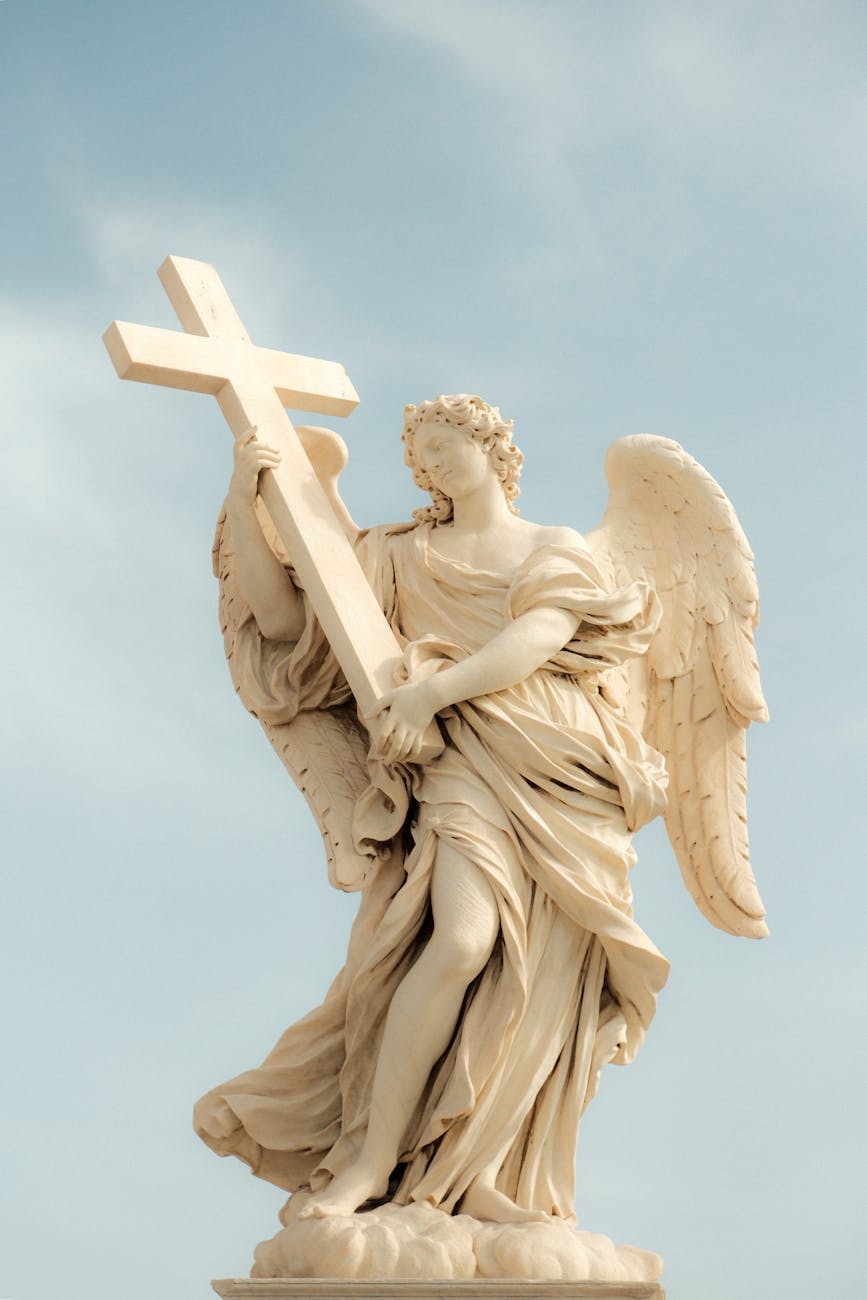
OK, so I’m putting two books in this one. The first is an ARC that’s coming out next week. The second is a book I was recommended as part of a group chat regarding the first book. Both hit very close to home for this former Catholic.
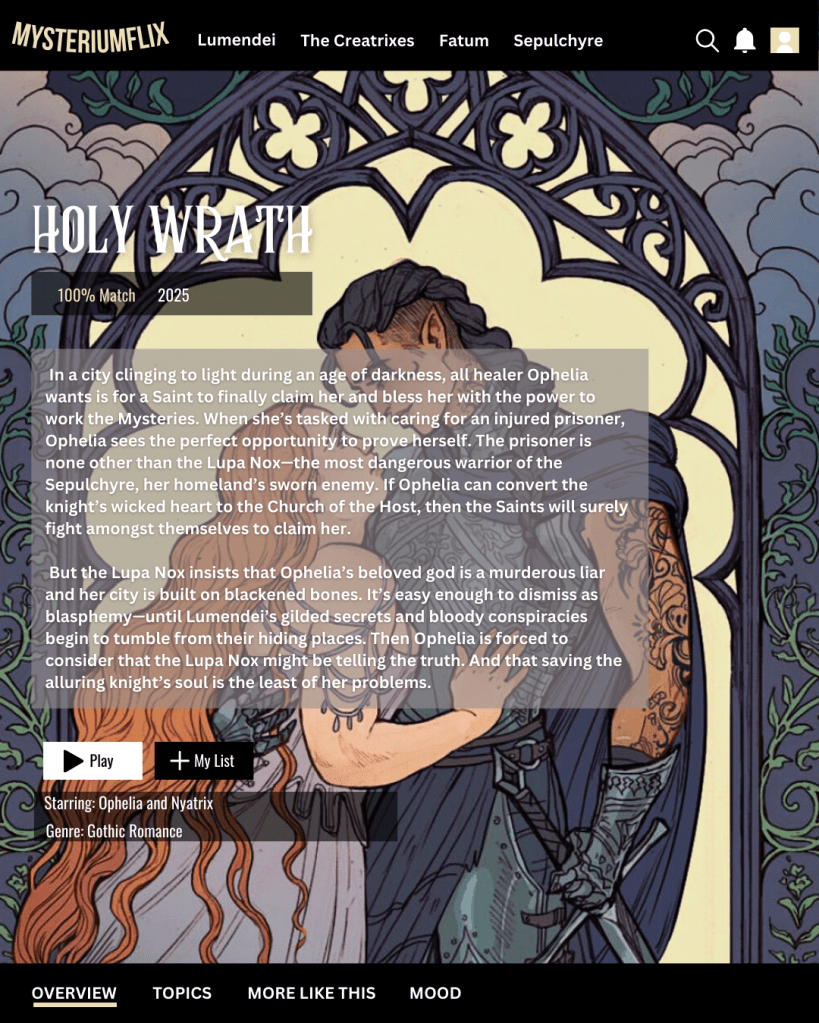
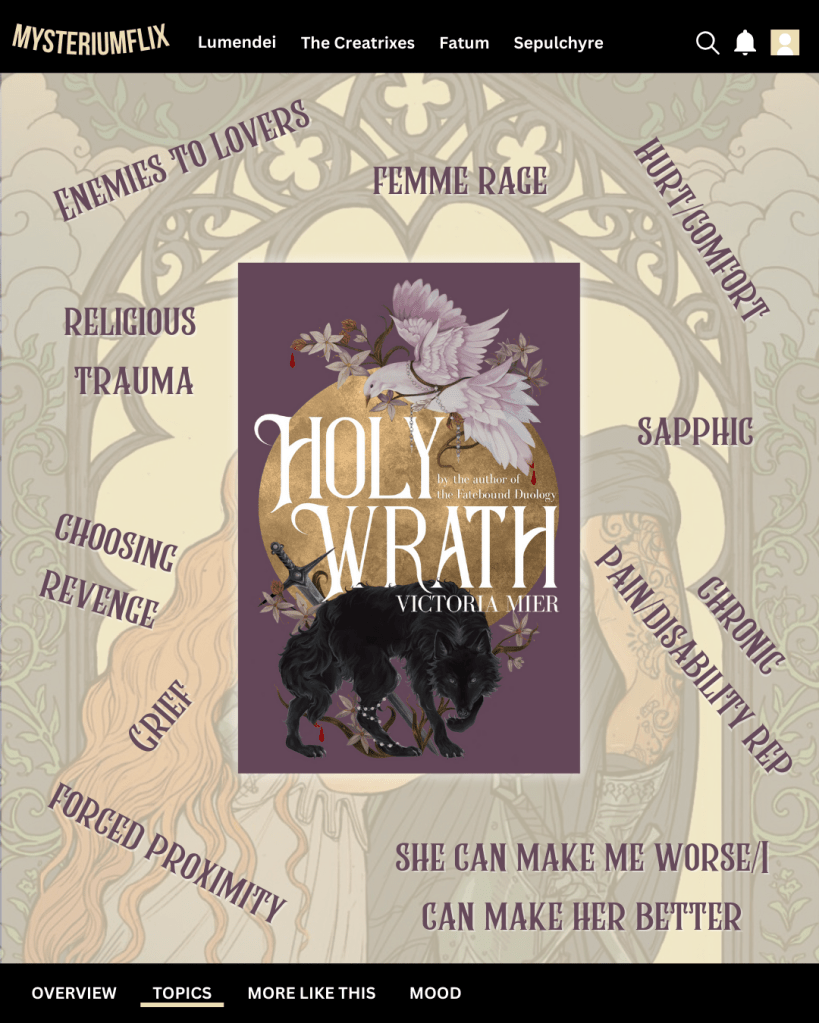
I am still not sure I have the words to describe how much this book affected me. As a lapsed/ex-Catholic, there was so much here that I recognized, so much that mirrored some of my own questions growing up. Holy Wrath is a story of anger and rage, yes, but it is also so much a story about grief and discovery and that unending ache for wanting to find your place in the world. To find where you belong, and who will be there to support you and tell you that you are more than enough. That you are worthy of love and patience and compassion, and that you can be free to question and search and learn.
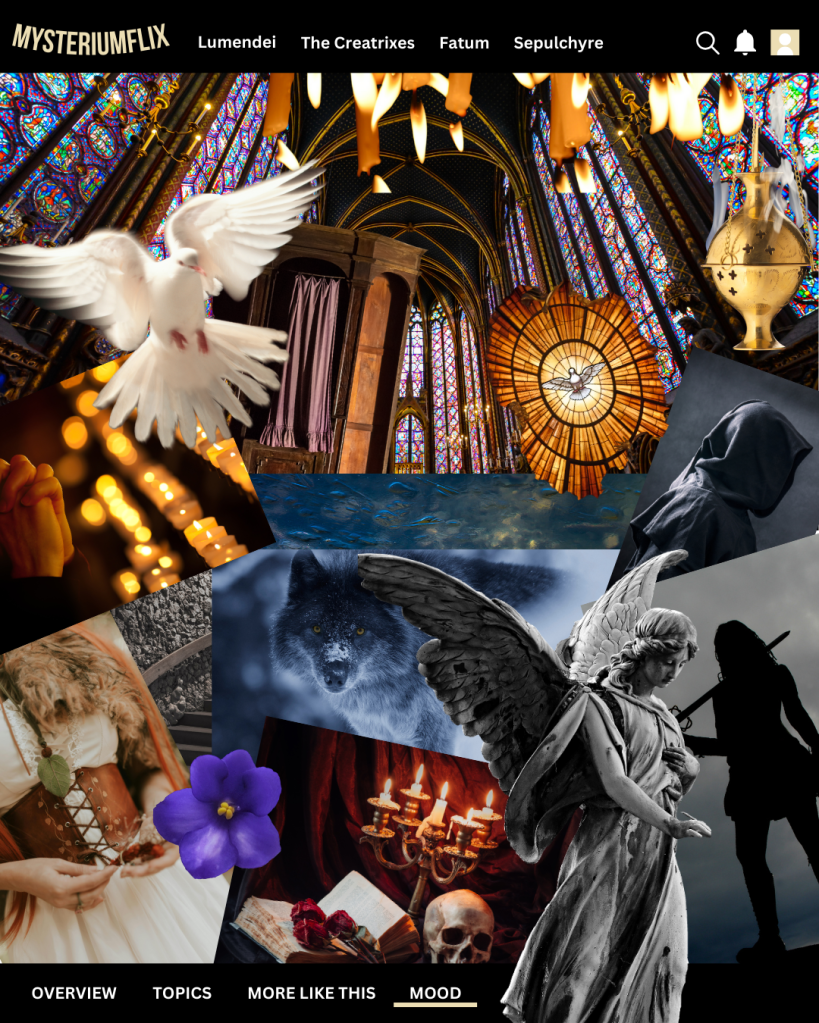
Ophelia has lived her life as a foundling, with an injured leg from childhood that gives her constant pain – a reminder of how different she is from everyone else in Lumendei – living under the grace of the Church. All she wants is to be able to take part, be able to use her gifts to save souls and bring them to the Church that saved her. She is engaged to Renault, an Apostle from a higher family. And yet, she yearns for more. When a warrior from the Sepulchyre is captured, it is Opehlia that has been tasked with her healing, and converting her to the Church.
Instead, Ophelia finds in the Lupa Nox, Nyatrix, a woman who only serves to make her question everything she has known. And to realize that the parts of herself she has long kept hidden and covered in guilt and shame may be what she truly needs to live. These two women lead us on a journey of secrets and lies, leading to the realization that what Opehlia (and Nyatrix) have been led to believe may just be illusions written by men and gods to maintain control and power.
The evolution of Ophelia’s understanding of her world, and herself, was achingly beautiful. Her exploration of herself with Nyatrix was intimate and gentle and yet full of a deep well of passion.
All of the religious fervor and world-building brought me back to many of the rituals and words still in my memories from a childhood brought up going to church. Reciting prayers, asking for forgiveness for things that I did that I truly did not understand why they needed to be repented for. Learning that men held all the power in a culture that was ultimately built upon the words of men, and not a god. A culture that looked very pretty on the outside, but held centuries of darkness if you dug even a little beneath the surface.
I absolutely loved this book. Really, I have loved all of Victoria’s books so much. She writes stories that dig deep into your soul and sit themselves within, finding a home and reflecting so much of the human experience. And I thank the author very much for the chance to read this book as an ARC.
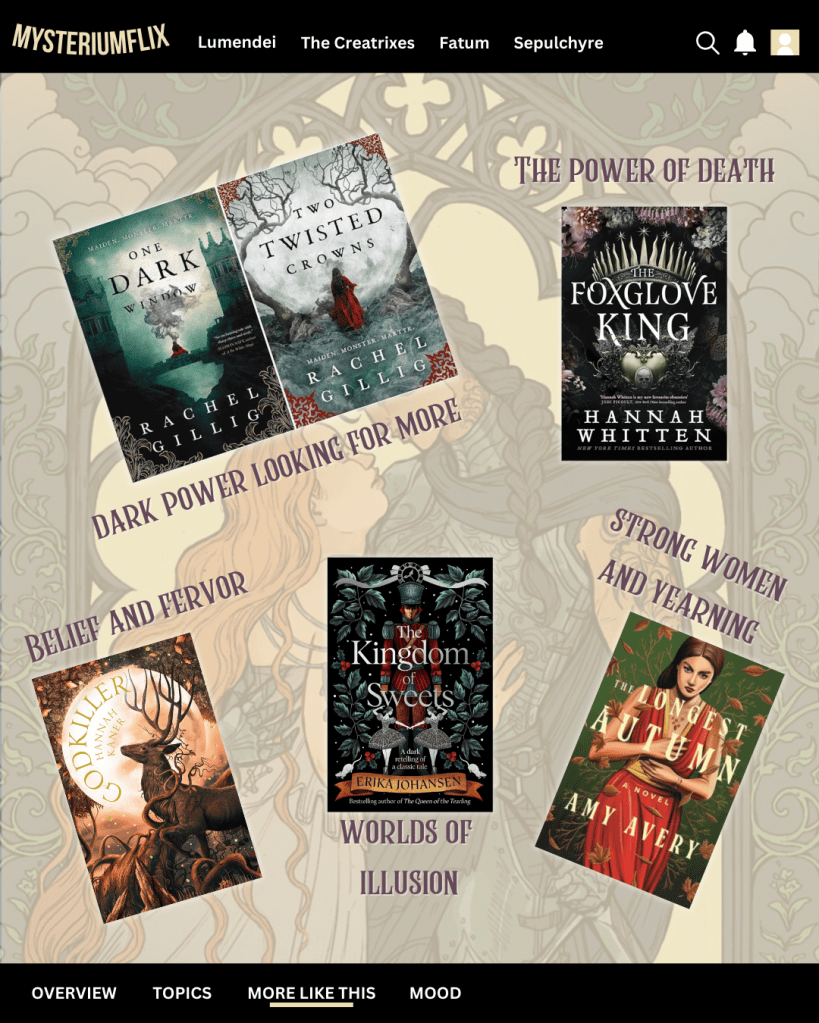
The second book is The Book of Longings. This one quietly dug in, reminded me of all my own questions as a child raised in the Catholic Church. It dares to give voice to women who lived in a time (honestly, not too far off from our own) when they were far too often silenced and subjugated and considered property. It gives us another way to think about how things might have happened, since what we do “know” of Jesus has been handed down over centuries, shaped with the words of men.
What if Ana was his wife? Ana, a young woman who could write, who longed for more than being handed off to another man who would never allow her to be more. What if Ana and Jesus lived, their hearts open to God in different ways. What if Ana sacrificed herself for her husband, in a way? What if there was a great love that never was told?
Ana chronicles stories, the lives of women that would have easily been forgotten. Maybe still could be. She endures. This book was haunting, beautiful, and tragic. If you have any ties to church or Christianity, it is a cautionary tale. I didn’t expect to cry, but at the end, when we see the betrayal of Judas and the ensuing moments through Ana’s eyes, I couldn’t stop the tears. I am far removed from my own religious upbringing, but I still find the stories and parables of the church interesting. And to see them in this story, it shows that there is so much that could have also been happening. That what is written in history is only a small fraction of the reality.

 scijessreads
Leave a comment